Saturday, April 11, 2009

First House Fire

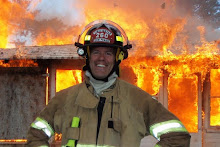
Received a page around 9:30pm for a chimney fire. By the time I made the station the call had escalated to “fire is spreading”. I made the station and was 5th on the tower. We don’t see many fires in our city so everyone was a bit stoked to see some action. Pulling up we could see the flames and smoke over the trees. By the time we reached the scene we set up the Tower our crew took an interior attack although the fire never breached the attic space.
The exterior crew was able to suppress the fire from reaching the inside. We spent the next few hours tearing the exterior chimney apart which showed a lot of smoldering siding.
All in all a good showing. Fire was suppressed early enough to prevent significant spreading. Got some exposure in the process of managing a scene, did a ladder work with a chain saw and saw a little hose time (very little).

Sunday, April 5, 2009

FF II and Haz Op's---Passed.

Over 200 hours of class. 37 chapters. Dozens of instructors. 6 demolished cars. Gallons of coffee. Four cities. Numerous tanks of supplied air and Tons of hands on experience.

Fire Fighter I; II and Hazardous Materials Operations and CPR. Done.

Eden Prairie started with a dozen new recruits (yellow helmets) and we all finished last week with class. Bloomington, Hopkins and Mound also graduated a number of FF’s. For Eden Prairie, the official graduation (black helmets and badges) won’t happen until early June. Now we focus on maintaining our active calls as well as the normal Thursday evening training sessions.

Future certifications will be Operator and EMT (not sure which order).

Monday, March 9, 2009

Five Classes Left

Vehicle Extrication

Going into the home stretch for Fire Fighter II. Tonight we took the liberty to cut, pry, lift, pull and smash a fleet of cars. K12, Jaws of Life (Spreader & cutter) center punch, haligen, axe, cribbing, and a little elbow grease.
We started with a fully intact Pontiac 2-Door

After cutting the hood open (K12) we cut the connections to the battery to prevent the airbag from going off.

Then all the window were removed/broke (center punch & halligan) including the windshield.

Next came the doors. Hydraulic Spreaders & Cutters (jaws of life) followed by the cutting of the A & B posts.


Finally, the roof is rolled back and complete access to the interior.

Wednesday, March 4, 2009

Seat Belt Seat Belt Seat Belt

We have started our training on vehicle extrication and focused today on the techniques around working with airbags. As much as airbags save lives during crashes they can be a disaster when working around them.


Seeing the aftermath of some wicked accidents.....wear your damn seat belts. Next week we cut apart a few cars.

Wednesday, February 18, 2009

Sprinkler Heads


Tonight we learned about everything you ever wanted to know about standing water pipes, fire alarms, smoke alarms, water gongs and everything else about fire alarms/suppression systems.

We ended the evening with a little water. Each FF had to demonstrate how properly stop the flow of water through a tripped sprinkler head by using a couple of door chocks/wedges or an official stopper.

Thanks to our neighbors in Bloomington (station #1) they have a room specifically equipped with sprinkler heads and water flow.

Friday, February 13, 2009

Thermal Imaging Camera (TIC).


Last night’s training was on the proper use and care for our Thermal Imaging Camera (“TIC”). I thought one class devoted to the use of a camera was going to be a waste of time. It is a camera with one button. Turn it on. Aim it and view the image. Granted the image is not your typical camera view but it is a picture that leverages heat signature (infra-red rays) and automatically converts to them to a pixel with relative gradation to the surrounding heat signatures.

As simple as it is to use the hands portion proved to be well worth the time. These camera’s are certainly a great addition to the ‘tool’ kit a fire fighter has to use but the main point from last nights lecture on the importance of not letting it be the only tool you rely upon was very clear.

In a simulated search and rescue it certainly can help in finding a warm body but only when the camera is looking in the right direction. Think of reducing your field of vision by 50% (looking through a 50mm photo lens). Great for an outdoor landscape…..tough inside a 15x15 room.

Regardless of that it is a cool tool and can help find hot spots behind walls, body’s (active and unconscious) in an open area (think zero visibility inside a room with black smoke);

Our camera even has the ability to provide pin-point heat reading with fairly strong accuracy. The blue flame from a propane burner was reading 937 degrees F. The face of a fellow fire fighter was at 97 degrees.

Tuesday, February 10, 2009

Dorment Blog

I guess the fact that my last post was on the 18th of January is a clear indication that not much has been going on in the city of EP as it relates to Fire & Rescue services.

I can say that I passed my Hazardous Materials Operations certification a few weeks ago. Now I am trained to know how to avoid coming in contact with nasty chemicals. In reality the HAZMAT training has been eye opening. To realize how many chemicals exist in our society on a daily basis daunting. Chlorine and Ammonia tanks to keep ice rinks cold or water clean to trucks hauling highly corrosive chemicals. Even a residential garage can be a hazmat situation with all fertilizer, gas cans, propane and paint situated in the same shelf.

As for FF II training....we just completed preincident planning and will be moving on to thermal imaging cameras.